

Varanasi Is Facing a Different Kind of Pressure… And It’s Bigger Than Reviews

- Published By: Tech Team
- July 29, 2026 / 06:40 PM IST


— Surya Prakash Josyula
There was a time when every film faced only one kind of pressure. Would audiences like it? Would they come to theatres on the first day? Would the film become a hit or end up as a flop? Those were the only questions that mattered.
But Indian cinema has changed dramatically over the past decade. Today, the biggest pressure on a film doesn’t come from the audience. It comes from the business side. That is perhaps the biggest transformation in the economics of modern Indian cinema.
To understand this shift, it’s important to recognize that a hit film and a business hit are no longer the same thing. A movie may impress audiences, receive positive reviews, and even collect hundreds of crores at the box office. Yet, it can still fall short as a business success.
The reason is simple. A film’s success is no longer measured only by its theatrical collections. Increasingly, it is judged by how much it was sold for before release and whether those investments are eventually recovered. Audience expectations exist on one side, while business expectations exist on the other. The gap between these two has come to define the economics of Indian cinema, and every major film is now evaluated through that lens.
Varanasi Is Not Just a Film… It’s an Example of a Changing Film Economy
The ongoing trade buzz surrounding SS Rajamouli and Mahesh Babu’s Varanasi perfectly illustrates this transformation. According to reports circulating in trade circles, the makers have quoted ₹150 crore for the Nizam theatrical rights. While the figure has not been officially confirmed, the discussion itself reveals something significant.
The market is no longer buying just a movie. It is buying an event.
If Nizam Is Worth ₹150 Crore… What About the Rest of the World?
The Telugu film business doesn’t revolve around Nizam alone. There are Andhra, Ceded, Karnataka, Tamil Nadu, Kerala, the Hindi belt, overseas territories, and the global market. If valuations rise across all these territories in a similar manner, the film’s theatrical business could reach unprecedented levels even before its release. That is where the real business pressure begins.
The Real Question Is No Longer ‘Will It Be a Hit?’… But ‘Can It Carry This Business?’
If a distributor acquires the Nizam rights for ₹150 crore, they are not expecting to recover just ₹150 crore. They expect profits and returns on their investment. That is why trade circles often say that films sold at record prices must also deliver record-breaking box office numbers.
If the reported ₹150 crore Nizam deal turns out to be true, the theatrical performance in that territory will have to justify such a massive investment. Otherwise, the business equations become far more challenging. In other words, a film today has to satisfy not only the audience but also the financial expectations of those who invested in it.
How Much Is the Rajamouli Brand Worth?
Whenever Christopher Nolan announces a new film, theatres and studios across the world begin raising expectations long before its release. The same has happened with James Cameron’s Avatar franchise. In India, SS Rajamouli has earned a similar level of market confidence.
Baahubali expanded the scale of the Indian film market, while RRR took that scale to a global level. The business discussions surrounding Varanasi can therefore be seen as a reflection of the value the market now places on the Rajamouli brand.
The Film Business Has Entered a New Era
There was a time when satellite rights were considered additional revenue. Then came digital streaming rights. Today, overseas markets, IMAX releases, premium formats, global distribution, and brand partnerships have completely reshaped the economics of filmmaking. In this new model, where a substantial portion of the investment is recovered even before release, expectations from the theatrical business have grown significantly.
As a result, a film’s success is no longer determined solely by audience applause. The real test is whether it can justify the thousands of crores’ worth of confidence the market has placed in it.
Viewed in that context, Varanasi is not just another big-budget film. It is a case study of where the Indian film business is heading. If Varanasi successfully carries that business burden, it won’t merely become another blockbuster—it could establish a completely new benchmark for the business of Indian cinema.
Related News

Kiran Abbavaram’s Most Ambitious Project #KA13, Titled Reality, Title Glimpse

Vishnu Manchu Calls for Industry-Wide System Against Deepfakes and Online Abuse

Telugu Cinema Should Go Pan-World, Not Just Pan-India: Producer Bunny Vas at Ekam Conclave
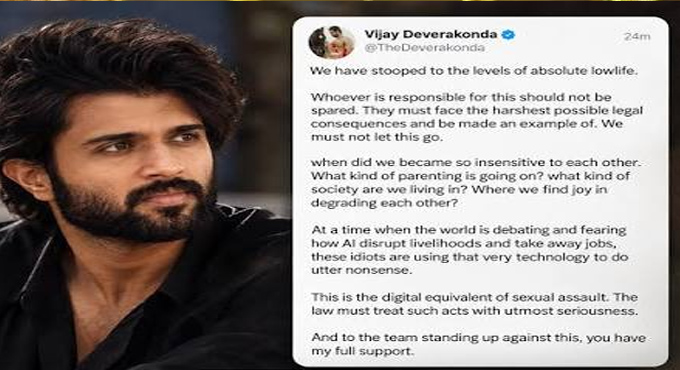
Vijay Deverakonda Stands in Support of NTR, Says “We Are Hitting an All-Time Low in Human Values”

“Chakkora – Lunar Love Bird” Team Reflects Sincerity and Passion: Shiva Nirvana