
Ridley Scott Spent 25 Years Fixing a Movie He Was Never Satisfied With
- Published By: Tech Team
- August 22, 2026 / 12:47 PM IST


— Surya Prakash Josyula
We often get tired when we have to do the same work again. We complain, get frustrated, and if there is no other choice, we somehow finish it. But can a director keep working on the same movie for more than 20 years? And this was not even a new movie. It had already been released, had become famous around the world, and had already given its director a special place in Hollywood. Still, the director did not feel that the movie was truly finished.
And we are not talking about a filmmaker who was just starting his career. We are talking about Ridley Scott, the director behind films like Alien, Gladiator and Black Hawk Down. A filmmaker of his level went back to the same movie again and again for almost 25 years. Didn’t he get bored? No. And that is where this story gets interesting.
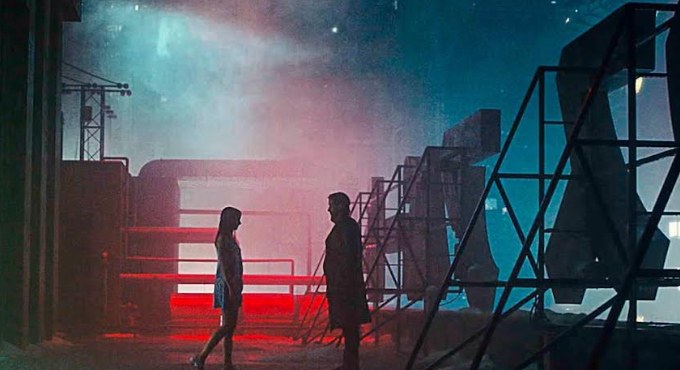
The movie was ‘Blade Runner’. Released in 1982, this sci-fi masterpiece took Ridley Scott almost 25 years to reach the version he really wanted. That version finally arrived in 2007 as ‘Blade Runner: The Final Cut’. And now, almost two decades later, the Final Cut is available to watch for free with ads on YouTube in the U.S. But the YouTube release is only a small part of the story. The bigger question is: Why did Ridley Scott refuse to let go of a movie that had already been released 25 years earlier?
The Movie Was Finished. But Not for Ridley Scott
Blade Runner takes place in a future Los Angeles. The story follows Replicants, artificial beings that look like humans. Powerful corporations create them and use them as workers, while also giving them a limited lifespan. When some Replicants rebel and return to Earth, Rick Deckard, a Blade Runner, is sent to find them.
On the surface, it looks like a futuristic detective thriller. But Ridley Scott wanted to ask a much bigger question: How do we decide who is really human? What if a machine has memories, emotions, the ability to love, or even a fear of death? Does that still make it a machine? Blade Runner never gives us a simple answer, and that is exactly what makes the film so special.
Studio Business vs. Ridley Scott’s Vision
The movie Ridley Scott wanted to make and the movie audiences saw in 1982 were not exactly the same. The studio felt that the story was too complicated and wanted to make it easier for audiences to understand. So they added Deckard’s voice-over narration and pushed for a happier ending. Scott wanted something very different: mystery, uncertainty and questions that would stay with the audience even after the movie ended.
Who is Deckard really? How human are the Replicants? Who actually has humanity in this world? Scott wanted viewers to leave the theater thinking about these questions rather than receiving easy answers. This was the difference between a director’s artistic vision and a studio’s business thinking. The movie was released, but inside Ridley Scott’s mind, another version of the movie was still alive.
An Obsession He Couldn’t Leave Behind
Normally, a director finishes a movie and moves on to a new story, new actors and a new production. But Blade Runner stayed with Ridley Scott like an unfinished thought. In 1992, ‘Blade Runner: Director’s Cut’ was released, bringing the film closer to Scott’s original vision, but it was still not the definitive version he wanted. Then came another 15 years, and in 2007, ‘Blade Runner: The Final Cut’ was released with Scott having full creative control.
So the journey that began in 1982 finally reached its destination in 2007. That is not normal filmmaking; it is a form of creative obsession. Of course, Scott was not sitting in an editing room for 25 years doing nothing else. During that time, he directed many other major films, but he never completely let go of Blade Runner.
As technology improved, better image and sound restoration became possible. Scott used those tools to return to the film, fix what he felt was wrong and bring it closer to the movie he had originally imagined. In a way, Blade Runner remained an unfinished piece of work in his mind until he finally had the tools and creative freedom to complete it properly.
What Changed in the Final Cut?
One of the biggest changes was the removal of Deckard’s voice-over narration. That may sound like a small change, but it had a major effect on the movie because the narration had been explaining too much to the audience. Once it was removed, the mystery became stronger and the film felt much closer to Scott’s original approach.
The Unicorn Dream sequence was also restored in full. This added more weight to the idea that Deckard himself might be a Replicant. The Final Cut did not completely change the story, but it changed the way audiences experienced the story. And that was exactly what Ridley Scott wanted.
Is It Perfectionism or Creative Obsession?
So what should we call what Ridley Scott did? Perfectionism? Obsession? Creative stubbornness? Or simply the quality of a great filmmaker? Maybe it is a little bit of all of them. Great creators love their work deeply, but they can also see its flaws more clearly than anyone else.
A normal viewer may watch a movie and say, “It’s good.” A filmmaker may still think, “But this is not what I wanted.” That one thought can take a creator back to the editing room again and again. Sometimes it is perfectionism, sometimes it is obsession, but that obsession can also become the fuel that turns good work into extraordinary work.
Why Does ‘Blade Runner’ Still Feel Relevant in 2026?
This may be one of Ridley Scott’s most impressive predictions. In Blade Runner, corporations create artificial beings, give them memories, use them for work and try to control them. But eventually, those artificial beings begin to question their creators. That idea feels very different when you watch the movie today, especially in the age of AI.
Now look at the questions the world is asking about artificial intelligence. How much will AI change human jobs? What happens if a machine can think like a human, talk like a human or show emotional responses? Will it always remain just a machine, or will we eventually have to create a new definition of what it means to be human?
Ridley Scott did not answer these questions in 1982. He simply asked them. That is why Blade Runner has not become old with time. In some ways, it feels even more relevant today because the future it imagined is no longer as far away as it once seemed.
And Now, It’s Free on YouTube
The Final Cut is currently available on YouTube’s free, ad-supported service in the U.S. Availability can vary by country, so the same free option may not be available everywhere. But the bigger story is not that an old movie is now free on YouTube. The bigger story is that a filmmaker spent almost 25 years trying to make one movie exactly the way he wanted.
That tells us something important about great filmmaking. Great directors are not simply born great; they keep working until what they see in their minds comes as close as possible to what appears on the screen. They change a scene if it does not feel right, change an edit if it does not work, and rethink an ending if it does not match their vision.
Even when the world says, “This is already good enough,” they can still say, “But it is not what I imagined.” That is what makes Ridley Scott’s journey with Blade Runner so fascinating. The movie was released in 1982, but Ridley Scott finally got his definitive version in 2007.
Twenty-five years for one vision.
And perhaps that is the real meaning of ‘The Final Cut’.
Not simply the final version of a movie.
The final version of what a filmmaker had been seeing in his head all those years.
Related News
A 15-Second Video Didn’t Just Go Viral. It Scared Hollywood.
Dead Souls: How a 184-Year-Old Classic Was Reimagined for 2026
Studio Ghibli Has Built a Magical World. What Happens Next?
Decapitations? Fine. Gore? Fine. Sex? Nope. China’s Tarantino Problem
Ramayana: Rama Must Win in China, Not Just India! Is China the Real Target of Nitesh Tiwari’s ₹4,000-Crore Epic?