

Hidden Risk of “Double-Dipping” on AI— Why Most Investors are Unknowingly Overexposed
- Published By: techteam
- March 25, 2026 / 11:48 AM IST


NEW YORK: As the artificial intelligence gold rush continues to dominate global markets, prominent financial expert Shiva Duvvuru, CPA · Tax Circle, Inc. March 25, 2026, is issuing a stark warning to the investing public. New data reveals a hidden systemic risk: millions of retail investors are unknowingly “double-dipping” on AI, creating a dangerous concentration in their portfolios that could lead to devastating losses if the sector corrects.
Every week, a fresh wave of headlines urges investors to buy Nvidia, Microsoft, or “the next AI winner.” However, Shiva Duvvuru points out that most investors who already hold a standard S&P 500 index fund do not realize they already own a massive, automated stake in these exact companies.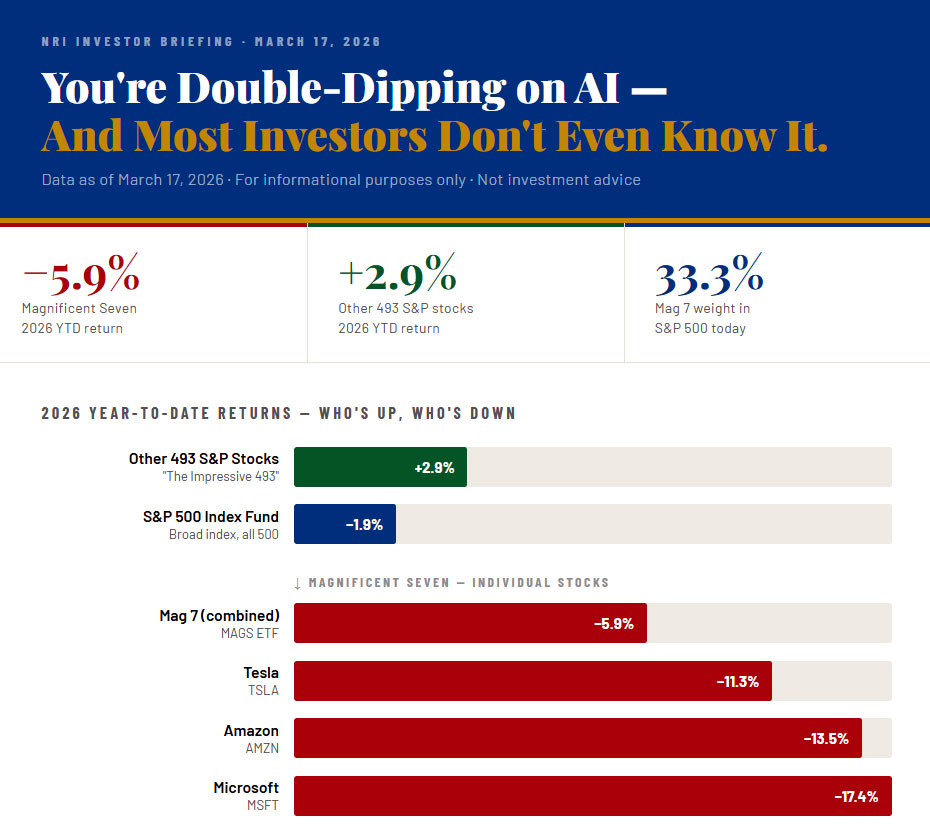
“The most dangerous investment move in 2026 isn’t missing AI,” says Shiva Duvvuru. “It’s accidentally doubling down on it.”
The Stealth Transformation: Your S&P 500 Fund is Now an AI Fund
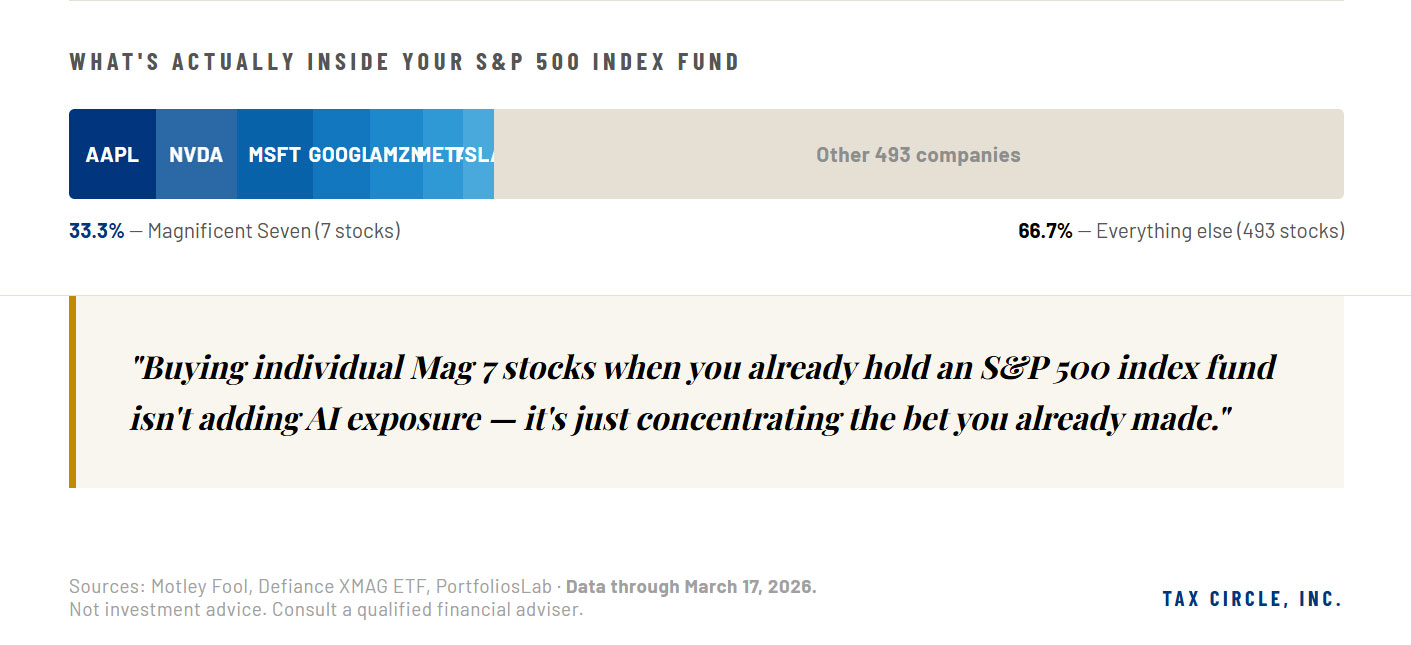
The traditional S&P 500 index fund, once a symbol of broad market diversification, has fundamentally changed over the last decade. Shiva Duvvuru highlights staggering market concentration data:
33.3% of the entire fund is now concentrated in just seven companies—the “Magnificent Seven” (Apple, Nvidia, Microsoft, Alphabet, Amazon, Meta, and Tesla).
In 2016, this weight was only 12.5%; the concentration has nearly tripled in just ten years under the weight of tech dominance.
The performance gap is historic: The Mag 7 saw a combined return of 875% between 2016 and 2025, compared to 235% for the full S&P 500.
Because every one of these seven companies is heavily AI-exposed, they tend to move in lockstep. Duvvuru argues that investors don’t have an “AI gap”—they have a high-risk AI concentration.
The “Double Hit” Phenomenon: Why Adding Individual Stocks is Backfiring
The report by Shiva Duvvuru highlights a critical mistake: investors who already hold an index fund but decide to “add a little more Nvidia” or “pick up some Microsoft” are effectively stripping away their own safety net.
The consequences of this strategy are playing out in real-time in 2026:
Over-Concentration: Buying individual Mag 7 stocks on top of an index fund increases exposure without adding any diversification.
The 2026 Correction: Through mid-March 2026, the Magnificent Seven have collectively fallen 5.9%. Microsoft has plunged 17.4%, and Tesla is down 11.3%.
The Cushion: Meanwhile, the other 493 companies in the S&P 500 are actually up 2.9%.
Investors holding only the index fund have remained roughly flat, protected by the “ballast” of the other 493 stocks. Those who followed the hype and doubled down on individual tech names have taken extra pain with no extra reward.
The NRI Perspective: Familiarity vs. Edge
For Non-Resident Indian (NRI) families managing wealth across both India and the U.S., Shiva Duvvuru notes the temptation to over-invest in tech is particularly high. Many NRIs work within the tech sector and feel a sense of “familiarity” with these brands.
However, Duvvuru warns that familiarity is not the same as a competitive edge. An NRI holding a U.S. index fund already has ~33% AI exposure. If that same investor holds Indian IT mutual funds (containing Infosys, TCS, or Wipro), they have even more indirect exposure, as those companies’ revenues are tied to U.S. Big Tech spending.
Historical Lessons: Owning the Economy vs. Picking Winners
History shows that technological revolutions—from railroads to the internet—create massive wealth for the economy but often destroy individual company bets.
“The investors who did best were not the ones who picked the right railroad stock. They were the ones who owned the whole economy as it transformed,” Shiva Duvvuru explains.
An S&P 500 index fund allows the market to decide the AI allocation automatically. If AI delivers, the index captures it. If it corrects, the index survives it. In a world of uncertainty, Duvvuru maintains that staying in the broad market remains the most rational response.
Final Thought: Where is your portfolio positioned if AI corrects 40% tomorrow? You don’t need to be right about the winner; you just need to stay in the game.
- By Shiva Duvvuru, CPA • Tax Circle, Inc. • admin@taxcircle.com
Related News

Meta Bets $900M on CRED – and Hands WhatsApp to Its Founder

Navi UPI introduces ‘Navi Secure’, bringing together its fraud prevention and user protection
The Next Evolution of Compliance: KDK Software and BomanIrani Champion an AI-Powered Future

Indian Gen Z Ditches the Annual Vacation for Weekend Trips, Airbnb Survey Finds
India’s 5G Subscriptions To Cross 1.1 Billion By 2031, Mobile Data Usage To Nearly Double