
Dead Souls: How a 184-Year-Old Classic Was Reimagined for 2026
- Published By: Tech Team
- August 20, 2026 / 04:44 PM IST


— Surya Prakash Josyula
Some stories grow old. Some ideas do not. That is the challenge of bringing a classic novel to the screen for a modern audience. You cannot simply repeat the old story. You have to change its world, its pace and sometimes even its genre, while protecting the idea that made the original story special.
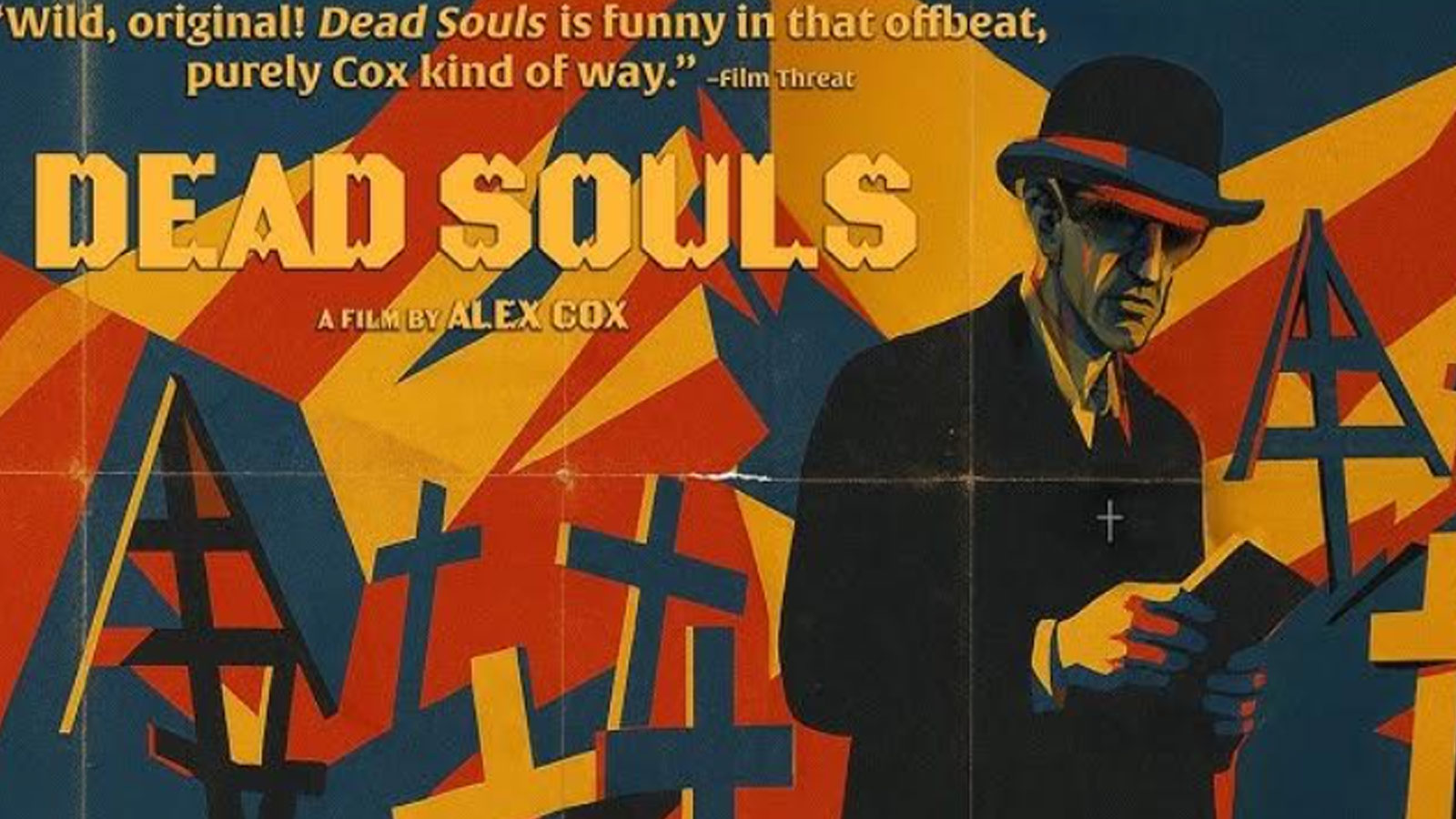
That is what director Alex Cox has attempted with Dead Souls, his new film inspired by Nikolai Gogol’s famous 1842 novel.
Gogol wrote the story nearly 185 years ago. Cox has moved it from 19th-century Russia to the American Southwest of the 1890s. The setting, characters and style have changed. But the central question remains.
So what exactly did Cox change? And does Gogol’s old story still connect with an audience in 2026?
What Was Gogol’s Dead Souls About?
The central character in Gogol’s novel is Pavel Ivanovich Chichikov, a man who desperately wants to become wealthy and respected. He does not have much money, but he wants to appear rich and powerful in society.
Instead of earning his fortune through the usual methods, Chichikov looks for a weakness in the system and finds one.
At the time, Russia counted serfs — peasants who were legally tied to landowners — as “souls” in official population records. The government conducted these censuses only every few years, which created a strange problem.
If a serf died between two censuses, his name could remain on the official records until the next count. The landowner still had to pay taxes for that dead person even though he was no longer alive.
Chichikov sees the opportunity immediately. He travels from one estate to another and asks landowners to sell him the names of their dead serfs.
The landowners also benefit. By transferring those names to Chichikov, they can stop paying taxes on people who are already dead.
Chichikov does not want the dead people themselves. He wants their names and official records. With those names, he hopes to make himself look wealthy, use them as proof of property and gain loans and social status.
That is where Gogol turns a clever scam into something much bigger. Chichikov is not the only dishonest person in the story. The landowners, officials and other people he meets are also driven by greed, vanity and self-interest.
The title Dead Souls, therefore, has a deeper meaning. It does not refer only to dead serfs. It also points to people who have lost their humanity while chasing money, power and social status.
Why Move the Story to America?
This is where Alex Cox makes his biggest change. Gogol’s Chichikov travels through rural Russia, visiting estates and meeting strange landowners and officials. Cox saw that basic structure as something that could work inside an American Western.
So he moves the story to the American Southwest of the 1890s. Russia becomes the frontier. Chichikov becomes a mysterious man named Strindler. The dead serfs become dead Mexican workers, while the Russian landowners are replaced by local businessmen, officials, a mayor, a sheriff and other powerful figures.
The story is not being copied scene by scene. Cox takes the central idea and gives it a completely different historical body.
The basic question remains the same: what happens when a person discovers a weakness in a system and tries to turn dead people into financial value?
What Has Changed in the Movie?
Strindler arrives in a small Arizona border town and begins approaching local businessmen, landowners and officials. He has an unusual proposal for them.
He offers to pay for the names, birth dates and other details of Mexican workers who once worked for them but are now dead.
At first, it looks like a strange business deal. But Strindler never completely explains who he is or what he really wants.
He gives different stories to different people. At one point, he appears to be connected to the government. Somewhere else, he seems like a census official. In another situation, he behaves like a religious figure.
This makes the mystery more important than it is in Gogol’s original story. The audience is forced to question Strindler along with the people in the town.
Who is he? Why does he want these names? And what is he planning to do with them?
The “Dead Souls” Idea Gets a New Meaning
Cox also changes the social meaning behind the story. In Gogol’s Russia, serfs were treated as property connected to landowners. In the American frontier, Mexican workers represent another form of economic exploitation — cheap labor in a society shaped by land, business and power.
The historical situations are different, but the central idea is surprisingly similar.
The system does not see the individual as a human being. It sees the person through economic value.
That is what makes the old story feel relevant again. The world has changed completely, but the habit of turning human lives into numbers, records and assets has not disappeared.
It Is Not Just a Western
Cox does not stop with changing the setting. He also plays with the Western genre itself.
The movie has the familiar Western ingredients: saloons, horses, guns, desert landscapes and shootouts. But then it suddenly moves in unexpected directions, with musical sequences, zombie elements, stop-motion and surreal moments.
Cox has said that the film initially felt too much like a traditional Western during production. He did not want it to become another familiar cowboy movie, so he added more unusual elements while shooting.
Instead of using huge visual effects or modern action sequences to make the story feel contemporary, he changes the way the story itself behaves.
That makes the movie feel less like a conventional Western and more like a strange experiment built from several different genres.
Do These Changes Work?
The film will not be for everyone. It is not a mainstream commercial Western, and its storytelling can be slow. The humor is often dry, while some characters deliberately have a theatrical quality.
The sudden surreal turns may also surprise viewers who expect a traditional Western.
But for audiences familiar with Alex Cox’s work, those choices may be the biggest attraction. His earlier films, including Repo Man and Straight to Hell, also played with counterculture, dark humor and genre conventions.
That same spirit is present here.
So the film does not feel like simply “Gogol’s old novel turned into a new movie.” It feels more like Alex Cox took Gogol’s central idea and pulled it into his own strange cinematic world.
How Has the Film Been Received?
This is not a major commercial release. It is a low-budget independent film, with Cox raising around $214,000 through Kickstarter to make it.
However, the movie has found support from festival audiences. It won the Best Narrative Feature Audience Award at San Francisco IndieFest, suggesting that the film has connected with the kind of audience it was made for.
That does not make it a mainstream hit. But for an independent film built around a nearly two-century-old literary idea, finding the right audience may be a more meaningful success.
Why Tell an Old Story Again?
A classic can be treated like a museum piece. You can preserve it, admire it and leave it untouched.
There is another option: read it again and ask what it means now.
That is the path Alex Cox has chosen.
The questions Gogol raised in 1842 belonged to Russian society at the time. But greed, corruption, the abuse of power and the habit of reducing human beings to numbers or economic assets do not belong to one particular century.
They keep returning in different forms.
That is why Dead Souls can still be relevant in 2026. The story is old, but the problem at its heart is not.
A New Answer to an Old Question
Making a movie from a classic does not mean simply putting an old story in front of a new camera. It means finding the question hidden inside the original story and asking it again in a world that a modern audience can understand.
That is what Alex Cox does with Dead Souls.
Gogol used dead serfs and the Russian landowning system to expose greed, status and corruption. Cox takes the same idea into the American frontier and connects it to labor, land, money, power and the weaknesses of institutions.
So this is not simply a film adaptation of an 1842 novel.
It is something more interesting — a 2026 answer to a question Gogol first asked in 1842.