

Union Budget 2026: Industry Leaders Hail Strategic Shift Toward Resource Security, MSME Empowerment, and Infrastructure Scaling
- Published By: techteam
- February 1, 2026 / 07:01 PM IST


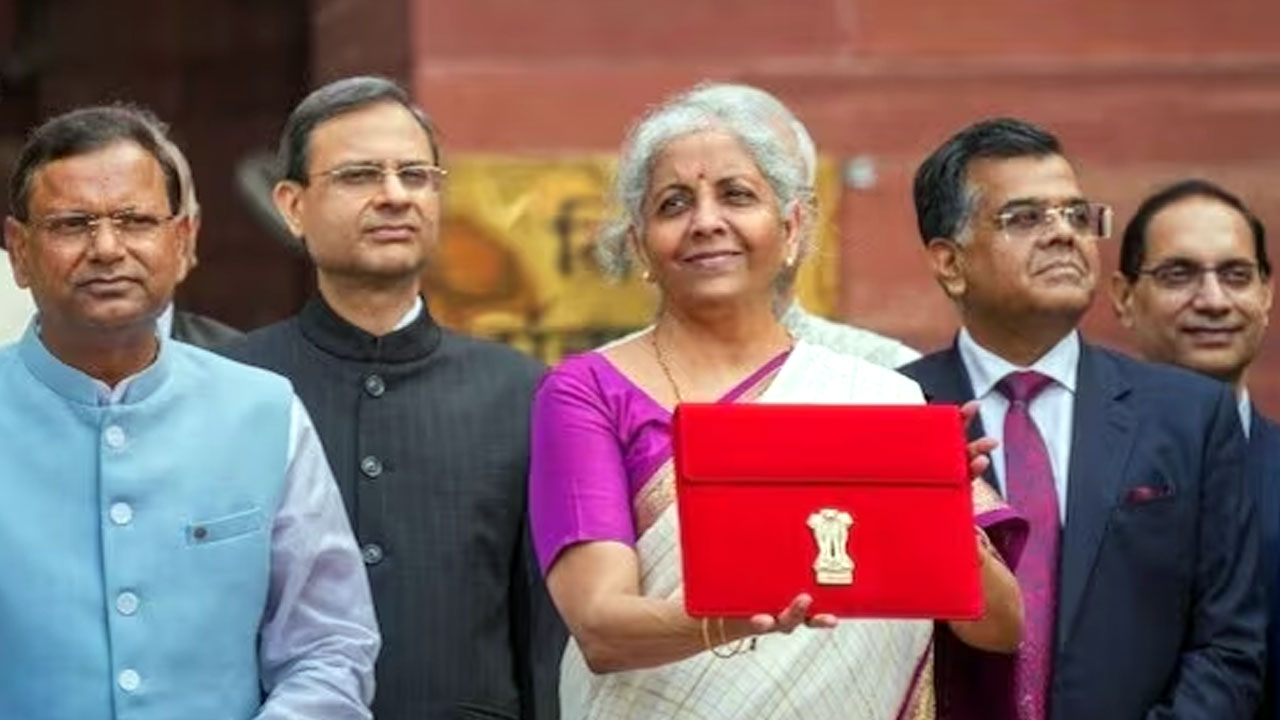
Hyderabad: The Union Budget 2026–27 has drawn widespread acclaim from across India’s industrial landscape, with CEOs and chairpersons characterizing it as a blueprint for long-term manufacturing resilience and global competitiveness. From the high-tech corridors of biopharma and semiconductors to the foundational sectors of real estate and MSMEs, the industry’s response reflects a sense of confidence in the government’s execution-led agenda.
Re Sustainability Limited.
Post-budget comment by Mr. Masood Mallick, Chairman, CII National Committee on Waste to Worth Technologies and Managing Director & Group CEO, Re Sustainability Limited.
The Union Budget 2026–27 marks a decisive shift in how India approaches resource security and decarbonisation—treating them as strategic economic priorities rather than regulatory afterthoughts.
The INR 20,000 crore commitment to Carbon Capture, Utilisation and Storage (CCUS) over five years is a particularly important signal. It directly addresses the competitiveness challenge Indian industry faces under mechanisms such as the EU’s Carbon Border Adjustment Mechanism and provides a credible pathway for hard-to-abate sectors like steel and cement to remain globally competitive while decarbonising.
Equally significant is the focus on building domestic capability across the critical minerals value chain—from exploration to processing. Duty exemptions on capital goods for critical mineral processing, along with support for rare-earth corridors in mineral-rich states, will strengthen urban mining and large-scale resource recovery.
For industries engaged in recovering value from end-of-life materials, this recognition of secondary resources as strategic assets is both timely and overdue.
The extension of duty exemptions for lithium-ion cell manufacturing in battery energy storage systems, and the rationalisation of excise duty on biogas-blended CNG, reflect a sophisticated understanding of how clean energy transition and circularity reinforce each other. These measures will unlock investment in recovery infrastructure and accelerate the shift from linear to circular industrial models.
By placing execution, scale, and infrastructure at the centre of its approach, this Budget positions circularity as foundational to India’s manufacturing resilience and its Viksit Bharat ambitions—giving industry the confidence to invest boldly in sustainable technologies.
Pharmexcil:
Quote from Mr. Namit Joshi, Chairman of Pharmexcil, on the recently concluded Budget 2026. Please help us in sharing this with regional print and online media.
“The Union Budget 2026–27 reinforces the kartavya of India’s pharmaceutical exporters to sustain the country’s leadership as the pharmacy of the world.
Pharma exports today are a critical contributor to India’s trade balance, foreign exchange earnings, and global health security. And this is driven largely by MSMEs that form the backbone of the export ecosystem.
The announcement of the Bio Pharma SHAKTI Project marks a historic and strategic shift in India’s pharmaceutical journey – from being a global leader in generics to emerging as a global bio-pharma manufacturing powerhouse. With a committed outlay of ₹10,000 crore over the next five years, the initiative is designed to build an end-to-end ecosystem for MSMEs t0 develop and manufacture biologics and biosimilar drugs, which represent the fastest-growing segment of the global pharmaceutical market.
Reforms on SEZ and GST rates clearly articulate the Union Government’s kartavya of creating globally competitive ‘Champion MSMEs’, and for the pharmaceutical sector, these reforms have direct implications for manufacturing strength and export leadership. Operational flexibility for SEZ-based manufacturers through a concessional DTA clearance window will strengthen capacity utilisation, cash flows, and supply chain resilience. For pharma companies, this provides critical flexibility to manage regulatory delays, inventory build-up and working-capital pressures, particularly in complex segments like biopharma and biosimilars. Pharmexcil believes this integrated approach will enable exporters to scale responsibly by directly addressing the operational efficiency, liquidity, and global competitiveness of medium and small pharmaceutical manufacturers.
Additionally, a predictable, science-driven and globally benchmarked regulatory framework is foundational for sustaining India’s credibility in regulated markets and increasingly define export value rather than volumes. The Budget’s emphasis on strengthening the Central Drugs Standard Control Organisation (CDSCO) through a dedicated scientific review cadre and domain specialists is a critical structural reform for India’s export ambitions.
Equally significant is the announcement to expand the National Institutes of Pharmaceutical Education and Research (NIPER) network from seven to ten institutes. This strategic capacity addition will directly augment India’s talent pipeline in regulatory science, quality assurance, biologics manufacturing and clinical research—areas where MSME exporters often face structural skill constraints.
These measures put together an integrated ecosystem that enables pharmaceutical exporters to institutionalise robust Quality Management Systems (QMS) while maintaining cost competitiveness. A robust domestic bio-pharma base will allow Indian companies – especially MSMEs and mid-sized players- to move up the value chain, access regulated global markets and compete in high-value segments traditionally dominated by a few advanced economies.
By strengthening critical enablers such as research infrastructure, clinical trial capacity, regulatory capability, skilled manpower, and advanced manufacturing facilities, Bio Pharma SHAKTI aims to significantly reduce India’s dependence on imports for complex biologic therapies. This is particularly vital in the context of rising non-communicable diseases such as cancer, diabetes, and autoimmune disorders, where biologics are becoming the standard of care.
Pharmexcil believes this budget creates the right conditions for pharma exporters to scale responsibly, deepen market access and reinforce India’s commitment of supplying affordable, quality medicines to the world – cementing India’s position at the forefront of the next phase of global pharmaceutical innovation.”
– Mr Namit Joshi, Chairman – Pharmexcil
Godrej Properties:
Mr. Gaurav Pandey, Co-Chairman, FICCI Committee on Urban Development and Real Estate, and Managing Director & CEO, Godrej Properties
” The Union Budget 2026 continues the strong focus on infrastructure-led growth, with a record INR 12.2 lakh crore capital expenditure and sustained emphasis on urban development, connectivity, and city-led growth. Measures such as the Infrastructure Risk Guarantee Fund, expansion of transport corridors, and support for city economic regions are positive for real estate demand over the medium term. The Government’s commitment to fiscal discipline and long-term growth creates a stable macroeconomic foundation, strengthening confidence across sectors and supporting sustained economic expansion.”
Angel One Ltd:
Following the Union Budget 2026-27 proposal to increase STT on futures and options, with STT on futures raised to 0.05% from 0.02% and STT on options, premium and exercise, increased to 0.15% from 0.1% and 0.125% respectively, please find below a quote from Amit Majumdar, Group Chief Strategy Officer, Angel One Ltd
“India’s retail participation and broader financialisation are still in the early stages. Marginal changes in transaction costs do not alter the long‑term behaviour of participants in the capital markets. Over the years, we have transformed Angel One into a diversified franchise spanning wealth, credit, asset management and soon insurance, adding steady, diversified revenue streams. With more Indians adopting digital investment platforms and building long‑term portfolios, and therefore our stated goal of deepening client engagement and continue compounding as a tech‑led, diversified wealth platform remains intact.
In Q3 FY26, F&O brokerage contributed about 44% of our gross revenue, while interest income from client funding and our broader platform accounted for around 33%, with the rest coming from cash and commodity broking, depository, distribution, and other income streams. This diversified mix reinforces the resilience of our model and gives us confidence that the broader trajectory of our business remains firmly intact.”
Overall impact on markets by the budge developments by Vaqarjaved Khan, Senior Fundamental Analyst, Angel One Ltd.
“The Budget strikes a prudent balance between growth and fiscal discipline, with FY27 fiscal deficit targeted at 4.3% of GDP and capex hiked to RS. 12.2 lakh crore, signalling sustained infrastructure push. Key positives include enhanced incentives for manufacturing, semiconductors, biopharma, textiles, and MSMEs via a Rs. 10,000 crore funds, alongside boosts for agriculture, defence, and clean energy positioning these sectors for accelerated expansion. The rationalized TDS/customs duties and tax slab simplifications ease compliance, fostering business confidence. For Indian markets, while the STT hike on F&O triggered a knee-jerk sell-off (Sensex down 600+ points), the focus on jobs, exports, and reforms should support long-term equity upside, especially in infra, renewables, and export-oriented plays, amid resilient 6.8–7.2% GDP projections.”
Galaxy Health Insurance
Mr. G Srinivasan, MD and CEO, Galaxy Health Insurance on the expansion of AHPs proposed in Union Budget 2026:
“The proposed expansion of allied health professionals across diagnostics, rehabilitation, mental and peri-operative care, through the upgradation of institutions and the addition of one lakh professionals over the next five years, strengthens healthcare capacity and eases pressure on hospitals. Faster diagnosis, shorter lengths of stay and more efficient care delivery can help health insurers lower claim severity and improve cost predictability, while accelerating the shift from hospitalisation-only covers to OPD, allied-care and mental health–inclusive products.”
Mr. Sanjay Agarwal From Ambit Finvest.
Budget 2026 Bets Big on MSMEs with ₹10,000 Cr Equity Push and Liquidity Reforms
“The 2026 Budget underscores a decisive push to make Indian MSMEs globally competitive. The ₹10,000 crore SME Growth Fund, providing equity support to high-potential MSMEs based on performance and scalability, is a landmark step toward creating MSME champions. Equally significant are measures to ease liquidity constraints: mandatory TReDS adoption by Central Public Sector Enterprises, credit guarantee support for invoice discounting, integration of GeM with TReDS, and development of receivables as asset-backed securities. The initiative to revive ~200 stressed industrial clusters further modernises infrastructure, restores jobs, and strengthens MSME competitiveness.”
Mr. Mukundan Menon, MD, Voltas Ltd.
The Union Budget 2026–27 reflects a confident and future‑ready macroeconomic vision, firmly aligned with India’s Viksit Bharat aspirations. By combining strong fiscal discipline with a record public capital expenditure outlay of ₹12.2 lakh crore, the government has reinforced the foundation for inclusive, broad‑based, and durable growth.
The Budget’s strategic push on manufacturing and technology is especially significant for the consumer durables sector. Initiatives such as the India Semiconductor Mission 2.0 and the enhanced ₹40,000 crore outlay for electronics component manufacturing will meaningfully deepen domestic value addition. These measures not only improve affordability for consumers but also elevate India’s competitiveness in global value chains.
Equally important is the Budget’s sustained emphasis on urban infrastructure development. Investments in modern transit systems, housing, and smart city capabilities create a multiplier effect, boosting jobs, strengthening income visibility, and expanding the addressable market for technology-driven, energy-efficient appliances.
The introduction of the New Income Tax Act and the Government’s focused efforts on easing compliance are timely reforms that will enhance household confidence. As disposable incomes rise and purchasing power strengthens, we expect a positive impact on discretionary consumption across categories.
Overall, this Budget strengthens a constructive growth cycle, enhanced investments will translate into more robust incomes, which in turn will drive demand for Make in India, energy-efficient, and smart consumer technologies. It sets the stage for sustained momentum in domestic manufacturing and positions India strongly for the next phase of transformation.
Mr Manoj Bhat, Managing Director & CEO of Mahindra Holidays & Resorts India Ltd
“The Union Budget 2026 reinforces the government’s intent to use tourism and hospitality as levers for balanced economic growth rather than treating them as standalone consumption sectors. The focus on destination development beyond metros, improved physical connectivity, and a sharper push on spiritual and heritage circuits reflects a recognition that tourism growth must be geographically distributed and locally rooted.
Equally important is the emphasis on skilling and workforce development. As the sector expands into tier two and three markets, the availability of trained talent will determine not just service quality but the sustainability of growth itself. By linking infrastructure creation with human capital development, the Budget moves the conversation from short-term demand creation to building a resilient, employment-generating tourism ecosystem.”
Mr. Arnab Banerjee, MD & CEO, CEAT:
“The Union Budget lays a strong foundation for sustained growth across India’s mobility and manufacturing ecosystem, with continued emphasis on infrastructure development, expansion of freight and logistics networks, and focused support for construction and equipment manufacturing directly translating into higher vehicle utilisation on roads and worksites. This, in turn, drives demand for tyres across commercial and passenger segments, while the push for Tier II and Tier III city growth further broadens mobility needs beyond metros, creating a durable demand environment and a positive long-term outlook for the automotive and tyre industry. Importantly, the focus on education infrastructure and skilling including measures that encourage greater participation of women in technical and professional roles will help industry build a more diverse, future-ready manufacturing workforce.”
Godrej Consumer Products Limited
Sharing below the post budget quote from Mr Sudhir Sitapati, Managing Director & Chief Executive Officer, Godrej Consumer Products Ltd.
“We particularly welcome the MAT credit set-off being allowed up to 25% of the tax liability under the new tax regime. This move improves cash flows and makes the new tax regime smoother for companies with accumulated credits, freeing up capital for reinvestment into growth and consumption-led categories” – – Sudhir Sitapati, Managing Director and CEO, Godrej Consumer Products Limited (GCPL)
Mr.Vishwas Patel, Managing Director, AvenuesAI Ltd and Chairman Payments Council Of India
“With Zero MDR of UPI and the Government allocating a mere INR 2000 crores for processing 30 crore transactions every day for free will choke the entire ecosystem for funds for scaling and growth. We were expecting the government incentive to be above INR 10,000 crores. With these kinds of incentives for the fintech industry, it will be very difficult to get the next set of 300 million Indians on the Digital payments bandwagon as well as deploy acceptance mechanisms in the hinterland of our country. With increasing deployment and servicing costs as well as increasing RBI compliances costs, it will choke the growth. We don’t want to survive on government incentives. The only solution is for the government to allow us to charge a low controlled MDR of 30 BPS on UPI P2M transactions only for merchants with more than Rs. 20 lakhs turnover. The incentives can continue for smaller merchants by offering them Zero MDR. UPI P2P can continue be zero charges. There are approximately six crore merchants in India accept digital payments out of which 90 per cent are categorised as Small Merchants as per definition of RBI (turn over Rs. 20 L and below per annum), with around 50 lakh merchants categorized as large enterprises. Enabling MDR for Rupay Debit and UPI large merchants will ensure sustainable monetization for service providers without disrupting digital payment adoption at the grassroots level as the merchants already pay MDR for different payment systems. Why should the government incentivize us with taxpayers money for processing transactions for large merchants? UPI dominates as India’s most favourite payment option and every merchant will continue to offer UPI even by paying a mere 30 BPS as processing charges as they are anyways paying 2% for credit cards and other options.”.
Rakesh Jain, CEO, IndusInd General Insurance
Union Budget 2026–27 Lays Strong Foundation for Insurance-Led Growth and Resilience
Union Budget 2026–27 is a forward-looking and reassuring document presented at a time when global volatility, geopolitical tensions, and supply-chain disruptions continue to shape economic realities. The Finance Minister’s emphasis on accelerating growth especially in new age sector while strengthening resilience reflects a clear understanding of what India needs at this stage of its development.
For the general insurance sector, several parts of this Budget create strong tailwinds. The MSME-focused measures including the ₹10,000 crore SME Growth Fund, the additional support to the Self-Reliant India Fund, and the significant strengthening of the TReDS ecosystem through CPSE onboarding, credit guarantee support, GeM linkages, and securitisation of receivables expand formalisation and improve liquidity for small businesses. These steps broaden the base of insurable enterprises and support wider adoption of property, liability, marine, cyber and employee health insurance in the country.
The reforms related to motor insurance, particularly the exemption of income tax on interest awarded by the Motor Accident Claims Tribunal and the removal of TDS, will meaningfully improve claimant outcomes and reinforce trust in the claims process. This is an important step towards making motor insurance more customer centric and responsive.
The Government’s ₹10,000 crore Biopharma Shakti initiative aims to position India as a global hub for biologics and biosimilars, strengthening domestic research and manufacturing. The Budget also expands health capacity by adding Allied Health Professionals, enhancing district level emergency and trauma care, training caregivers, and supporting regional medical hubs. These measures together improve healthcare delivery, outcomes, and long term insurance sustainability.
Beyond direct sector touchpoints, the Budget’s large-scale push on infrastructure including increased public capex of Rs12.2 Lakhs crore, dedicated freight corridors, expansion of waterways, high-speed rail development, and city economic regions opens major avenues for engineering, project liability, and specialty insurance. The proposed Infrastructure Risk Guarantee Fund is also a welcome move that can help de-risk large projects and accelerate private-sector participation.
Equally important is the renewed focus on India’s next phase of urban expansion. The plan to develop Tier 2 and Tier 3 cities through City Economic Regions signals a major shift in how regional growth will be shaped. By channelling investment into these emerging urban centres and strengthening them around their core economic strengths, the government is enabling more balanced urbanisation, stronger commercial ecosystems, and modern infrastructure. As these cities scale, the complexity of economic activity will rise, increasing the demand for holistic risk solutions across property, infrastructure, liability and transit. Insurers will play a crucial role in helping businesses and communities in these regions manage risks effectively and grow with confidence.
The Budget’s strong emphasis on renewable energy, carbon capture, and advanced manufacturing broadens the risk landscape in areas such as climate-linked exposures, environmental liability, and sustainable energy projects. This creates opportunities to scale parametric covers, catastrophe protection, and climate-risk solutions that will be crucial for India’s long-term resilience.
As India moves confidently towards its vision of Viksit Bharat, the general insurance sector is committed to partnering in this journey protecting people, supporting businesses, enabling infrastructure, and building a more secure and resilient nation. – Rakesh Jain, CEO, IndusInd General Insurance
Mr.Vishwas Patel, Managing Director, AvenuesAI Ltd and Chairman Payments Council Of India
“With Zero MDR of UPI and the Government allocating a mere INR 2000 crores for processing 30 crore transactions every day for free will choke the entire ecosystem for funds for scaling and growth. We were expecting the government incentive to be above INR 10,000 crores. With these kinds of incentives for the fintech industry, it will be very difficult to get the next set of 300 million Indians on the Digital payments bandwagon as well as deploy acceptance mechanisms in the hinterland of our country. With increasing deployment and servicing costs as well as increasing RBI compliances costs, it will choke the growth. We don’t want to survive on government incentives. The only solution is for the government to allow us to charge a low controlled MDR of 30 BPS on UPI P2M transactions only for merchants with more than Rs. 20 lakhs turnover. The incentives can continue for smaller merchants by offering them Zero MDR. UPI P2P can continue be zero charges. There are approximately six crore merchants in India accept digital payments out of which 90 per cent are categorised as Small Merchants as per definition of RBI (turn over Rs. 20 L and below per annum), with around 50 lakh merchants categorized as large enterprises. Enabling MDR for Rupay Debit and UPI large merchants will ensure sustainable monetization for service providers without disrupting digital payment adoption at the grassroots level as the merchants already pay MDR for different payment systems. Why should the government incentivize us with taxpayers money for processing transactions for large merchants? UPI dominates as India’s most favourite payment option and every merchant will continue to offer UPI even by paying a mere 30 BPS as processing charges as they are anyways paying 2% for credit cards and other options.”.
Mr Manoj Bhat, Managing Director & CEO of Mahindra Holidays & Resorts India Ltd
“The Union Budget 2026 reinforces the government’s intent to use tourism and hospitality as levers for balanced economic growth rather than treating them as standalone consumption sectors. The focus on destination development beyond metros, improved physical connectivity, and a sharper push on spiritual and heritage circuits reflects a recognition that tourism growth must be geographically distributed and locally rooted.
Equally important is the emphasis on skilling and workforce development. As the sector expands into tier two and three markets, the availability of trained talent will determine not just service quality but the sustainability of growth itself. By linking infrastructure creation with human capital development, the Budget moves the conversation from short-term demand creation to building a resilient, employment-generating tourism ecosystem.”
Santosh Iyer, MD & CEO, Mercedes-Benz India.
“Budget’s strong focus on infrastructural development, with addition of Rs 1 lakh crore in capex, is a step in right direction developing the country’s evolving mobility ecosystem. Better highways and improved intercity connectivity have historically driven luxury car demand in India. The fiscal prudence reflected in the 4.3% deficit target, combined with strong focus on exports, sends a strong signal of macroeconomic stability, which may lead to a less volatile currency. Overall, the emphasis of the budget is on strengthening ease of doing business, and the deferral of customs duty payments up to 30 days, can improve cash flow significantly. This budget primarily focuses more on long-term gains, rather than immediate ones.”
Mr. Prashanth T.S. , President & Head – Mid-Corporates & Medium Enterprises Group, Axis Bank.
“The Budget meaningfully improves the growth runway for MSME banking in India. By expanding credit guarantee coverage and accelerating the adoption of digital receivables financing through TReDS, the government has eased two long-standing structural challenges—collateral dependence and delayed cash flows. This creates a stronger foundation for banks to scale MSME lending, deepen relationships with formalising enterprises, and support credit growth in a more calibrated and resilient manner. Over time, this can strengthen balance sheets and reinforce the role of MSMEs in driving India’s next phase of economic expansion.”
Viswanath PS, MD & CEO, Randstad India a talent company.
The Union Budget 2026–27 marks a decisive shift from intent to impact, setting the stage for sustained job creation through an execution-driven agenda. At Randstad India, we welcome the targeted investments in high-value sectors like biopharma, manufacturing, and semiconductors, which, alongside the new ₹10,000 crore SME Growth Fund, will accelerate demand for specialized talent and formal hiring models across the country.
Equally vital is the Budget’s sharp focus on bridging the gap between education and employability. Initiatives like the Education-to-Employment Standing Committee, the expansion of women in STEM through district-level hostels, and the SAMARTH 2.0 framework for the textile sector reflect a clear commitment to building a future-ready workforce. These measures directly address the industry’s need for skill-aligned, productivity-led hiring.
Furthermore, the introduction of City Economic Regions (CERs) and the thrust on Tier-II and Tier-III markets effectively decentralizes opportunity. By positioning these regions as emerging talent hubs, the Budget aligns with our conviction that India’s progress will be defined by how effectively we integrate people, skills, and jobs. This approach reflects reforms with results and ensures that the next phase of India’s growth is both inclusive and sustainable.
Related News

The Cascades Neopolis Partners with Spa L’Occitane en Provence to Bring a Provençal Vision of Better-Being to Residential Living in Hyderabad

Godrej Jersey Targets ₹1,000 Crore Growth Through Protein-Led Strategy

From Budget Rooms to a Global Booking Empire: The Ritesh Agarwal Story

Big Screen, Bigger Picture: Inside India’s Pan-India Box Office and the Multiplex Betting On It
Maruti Suzuki Collaborates with Five Startups for Innovation and Efficiency