


HYDERABAD : While India’s healthcare system has achieved monumental success in saving lives through advanced ICU care, trauma response, and complex surgeries, a new crisis is emerging: the struggle to return to a “normal” life after the hospital gown comes off.
Despite surviving conditions that were once considered fatal, millions of patients across the country are finding that survival is merely the start of a grueling journey. Many are left grappling with mobility loss, cognitive decline, and speech impairments long-term challenges that often stem from a healthcare infrastructure designed for acute treatment and rapid discharge, rather than sustained, structured recovery.
A Landmark Movement in Hyderabad:
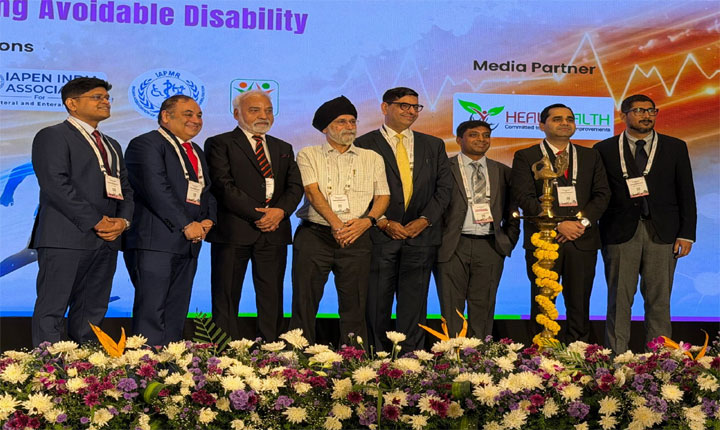
In a decisive move to bridge this gap, HCAH Rehab & Recovery Hospitals hosted the inaugural Recovery One Conference 2026 today at the ITC Kakatiya. This landmark event represents India’s first multidisciplinary effort dedicated exclusively to the science of rehabilitation and the reduction of avoidable disability.
The conference convened a diverse powerhouse of experts, including:
- Government Officials and Policymakers
- Hospital Leaders and Medical Specialists
- Insurers and Technology Innovators
- Academicians and Accreditation Experts
Under the theme “Enabling Fastest Recovery, Reducing Avoidable Disability,” the gathering sought to elevate recovery from an “afterthought” to a core pillar of the national healthcare strategy.
The Critical Window of Recovery:
A central theme of the discussions was the “early recovery window.” Specialists highlighted that the period immediately following a stroke, traumatic brain injury, or prolonged ICU stay is the most critical time for restoring bodily functions.
However, in India, rehabilitation is often fragmented. It is frequently misidentified as simple physiotherapy rather than a complex medical science. True recovery requires a cohesive team neurologists, psychologists, occupational therapists, nutritionists, and specialized nurses—working in tandem.
“Healthcare cannot end at survival or discharge,” stated Dr. Gaurav Thukral, President & Co-founder of HCAH. “The real success of medicine lies in whether a patient is able to walk again, regain independence, and reclaim dignity.”
The Future: AI and Integrated Ecosystems:
The conference also looked toward the horizon of medical technology. Mr. Ankit Goel, President & Co-founder of HCAH, emphasized that the next decade of healthcare will be defined by outcome-focused recovery. He pointed to AI-enabled rehabilitation, robotics-assisted therapy, and wearable monitoring systems as the keys to making personalized recovery accessible and measurable for India’s 1.4 billion people.
Beyond the Conference:
The organizers of Recovery One 2026 made it clear that this event is not just a scientific meeting, but the launch of a national movement. By integrating rehabilitation into clinical planning from day one, India aims to transform from a nation that simply saves lives into one that restores them fully.
As India continues to lead in emergency medical breakthroughs, the focus now shifts to the “Continuity of Care” ensuring that every survivor has the support needed to not just exist, but to thrive.